
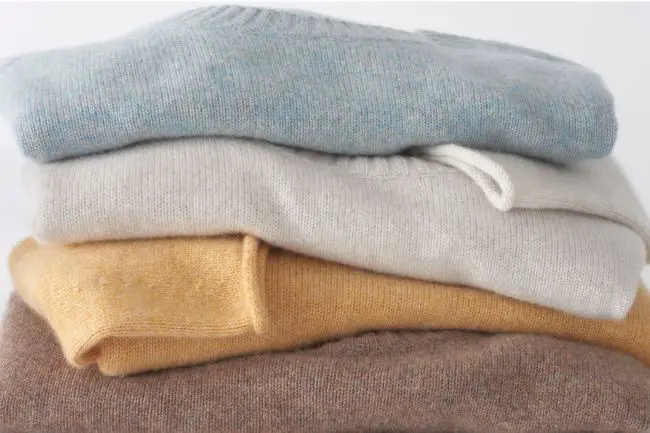
There’s nothing quite like the feel of cashmere on your skin on a cold day. It’s a splurge on the best of days; as a gift, it rivals diamonds and pearls. Cashmere has long been synonymous with easy elegance—light as air, warm as a wool coat, and soft enough to become a second skin.
But today, buying cashmere is trickier than ever. The label “100% cashmere” appears on everything from $89 sweaters to $2,000 (and upwards) designer knits. Many shoppers assume they’ve found a treasure at a bargain price, only to discover that their “deal” pills, sags, or feels limp after a season.
That’s because not all cashmere is the same, even when the label says “100% cashmere.” Understanding where cashmere comes from, how it’s graded, and which brands are most transparent about fibre quality can make the difference between a sweater that lasts a decade and one that lasts a winter.
Where cashmere really comes from
Cashmere comes from the ultra-fine undercoat of specific goats—today mostly raised in Mongolia, Inner Mongolia, and parts of China. Each goat produces only a few ounces of usable fibre per year, making cashmere rare by nature. Harsh climates create finer, softer fibres, which is why Mongolian cashmere is often considered the gold standard.
After combing in spring, the fibres are washed, sorted, de-haired, spun, and knitted. Each stage can enhance—or compromise—quality.
How cashmere is graded
Two qualities determine cashmere grade: The thickness, or, in this case the preferred thinness. And the length of the fibers.
Micron (diameter): softness
-
14–16 microns: Luxury-grade, exceptionally soft
-
16–18 microns: Mid-range
-
>18 microns: Coarser, less soft
Staple length: durability
-
30–38 mm: Long-staple, resistant to pilling
-
Below 28 mm: Shorter fibres, pills quickly
A cashmere goat has two kinds of hair:
- a coarse outer guard hair
- a superfine, soft undercoat (the “duvet”)
After winter, the goat naturally begins shedding the undercoat. Brushing at this moment collects only the loosened, soft down, not the coarser hairs.
Result: higher-grade cashmere with longer, finer fibres and a smoother finish.
Shearing, on the other hand, cuts all the hair at once, mixing coarse guard hair with fine cashmere and creating chopped, short fibres.
What different grades look like in the marketplace
Retailers often use labels like “Grade A,” “Grade B,” or “Grade C,” but these simply correlate to fineness and length. Grade A has the thinnest, longest fibres; Grade C is the coarsest. Most garments don’t disclose these details, making it hard to know what you’re buying.
Luxury cashmere (finest fibres, long-staple)
Brands like Loro Piana, Brunello Cucinelli, and N.Peal use the highest-grade Mongolian fibres (thinnest, longest fibres) and control every phase from sourcing to finishing. These sweaters are light yet insulating and develop a soft bloom instead of rough pilling. Prices run from $800 to over $2,000.
Mid-market cashmere (good quality, variable transparency)
Brands such as Naadam, Everlane, Quince, and some department-store lines offer better value, typically $100–$300, with cashmere that can still be Grade A but with thickness and length slightly lower in quality than luxury levels. Quality varies by retailer and style; transparency–how much detail they provide–is key.
Budget cashmere (short fibres, heavy processing)
Fast-fashion and discount brands often sell “100% cashmere” for under $100. These sweaters may feel soft initially—thanks to chemical treatments—but quickly stretch, pill, or lose shape. This grade of fiber is often used in cashmere throws and other home goods.
What brands say about their cashmere grade
Consumers increasingly want details about fibre quality. Some brands offer remarkable transparency; others rely on marketing language. Here’s what major retailers say publicly:
Luxury Cashmere
These are a few of the brands that operate at the top of the cashmere world. Their prices reflect not just the name but the technical superiority of their fibres: long staple lengths, extremely fine micron counts, and meticulous control over every stage of production.
Loro Piana
Sources its cashmere from goats in Mongolia and Inner Mongolia, where the harsh climate produces the fine down undercoat goats need to survive cold winters. They emphasize that cashmere fibre comes from the under-fleece (the “duvet”) of the goat — the very fine down that insulates the animal. Their finishing processes produce exceptionally smooth, long-lasting knitwear.
Brunello Cucinelli
Sources cashmere from Hircus goats raised in Mongolia/Inner Mongolia, citing the extremely cold climate as the reason these goats grow the fine, soft undercoat (the “duvet”) used for cashmere. The brand repeatedly emphasizes cashmere as an “extraordinary yarn” made of “very fine and extraordinarily soft fibres,” collected from the goat’s undercoat after natural shedding (via combing). Cucinelli is renowned for craftsmanship, timeless styling, and ethical manufacturing in its Umbrian workshops, with an emphasis on slow production and long-term wearability.
N.Peal
A British luxury brand since 1936, N.Peal uses ultra-fine Mongolian cashmere with a micron count at or below 15.5 and staple lengths above 38 mm. They maintain full traceability, offer an organic line certified to GOTS standards, and consistently deliver garments that feel soft yet hold their shape over time.
These are the brands for people who want investment cashmere—pieces that wear beautifully, resist pilling, and maintain their shape and texture season after season.
Brands with high quality, but below luxury
Quince — Most transparent
Quince lists Grade-A Mongolian cashmere, sometimes including micron (≈15.8–16.2) and staple length (≈34–36 mm). This is unusually detailed for the price point and a good indicator of true mid-to-high quality.
J.Crew — Certification, not grade
J.Crew uses cashmere certified under the Good Cashmere Standard, which focuses on animal welfare and traceability—not fibre fineness. They do not list micron or staple details.
Garnet Hill — Origin but no grade
Garnet Hill notes Mongolian or Inner Mongolian origin and uses responsible-sourcing language. No micron or staple-length data is provided.
L.L.Bean — Inner Mongolia + construction details
L.L.Bean highlights “Inner Mongolian two-ply cashmere,” which is a positive sign (two-ply increases durability). They do not publish fibre grade or microns.
Lands’ End — “Grade A” but no micron counts
Lands’ End specifies “Grade A” Inner Mongolian cashmere and emphasizes two-ply construction. Micron and staple length are not disclosed, but the grade claim is more detailed than most budget-friendly brands offer.
Neiman Marcus (private label)
The Neiman Marcus Collection often notes Inner Mongolian sourcing and knit construction details. Micron or fibre-length information is generally not provided.
Bloomingdale’s (C by Bloomingdale’s)
Product pages typically say only “100% cashmere.” No grade, micron, or origin is listed.
When the tag says only “100% cashmere”
Most sweaters offer no technical information, but you can evaluate quality yourself.
1. Touch test: soft but not slippery
Good cashmere feels soft with a touch of structure. Overly silky or limp cashmere items often are made with chemically softened lower-grade fibre.
2. Stretch test
Gently stretch an inch of fabric.
-
If it springs back, the fibres are long.
-
If it stays stretched or rippled, it’s lower quality.
3. Light test
Hold it up to a window.
-
Dense and opaque: better yarn, longer fibres.
-
See-through: thin, loosely spun, often poor quality.
4. Pilling test
Rub lightly. Immediate fuzzing or small pills suggest short fibres.
5. Warmth test
Good cashmere warms quickly in your hands—its hallmark.
6. Visual test
Look for even stitching, a smooth surface, and consistent color.
The takeaway: what to spend, and when
A good cashmere sweater will last years, not months. When choosing:
-
Look for transparency (microns, staple length, origin, ply).
-
Prioritize Inner Mongolian or Mongolian cashmere—climate matters.
-
Two-ply construction is a good durability indicator.
-
Don’t rely on brand reputation alone; fibre quality varies within brands and across seasons.
-
Use your hands: density, recovery, warmth, and resilience tell the truth.
So go ahead, splurge on a cashmere sweater or wrap. Just be smart about it. And if you’re adding it to your gift wish list (that Loro Piana cashmere umbrella catch your eye?), you might want to tack a copy of this article to it.
Blue Hare has affiliate relationships with Amazon and other retailers. We may make a commission on purchases made through qualifying links on this page at no additional cost to you.
* * *
You may also like
- Whatever happened to the Pashmina?
- Walk like a Norwegian: how to embrace winter the Scandinavian way
- Turn up the glow: Date night makeup for mature skin
Find more articles for women like you on Blue Hare’s home page.